
A network of tenant sites that anyone on the team could keep up to date.
Site updates in minutes, not days, for a national healthcare real estate company.
Tenants used these sites to find building information, pay rent and submit service requests. Our founder led the redesign of the admin experience behind them.
What changed.
Days → minutes
Time to build or update a site
After the rebuild
≈ $240K
Annual maintenance cost savings, across 400 buildings
Per year
Figures as reported at the time.
- Client
- A national healthcare real estate company (in-house).
- Engagement
- In-house role.
- What we did
- User research, affinity mapping, prototyping, a custom multi-site web platform.
Updating a site shouldn’t take days.
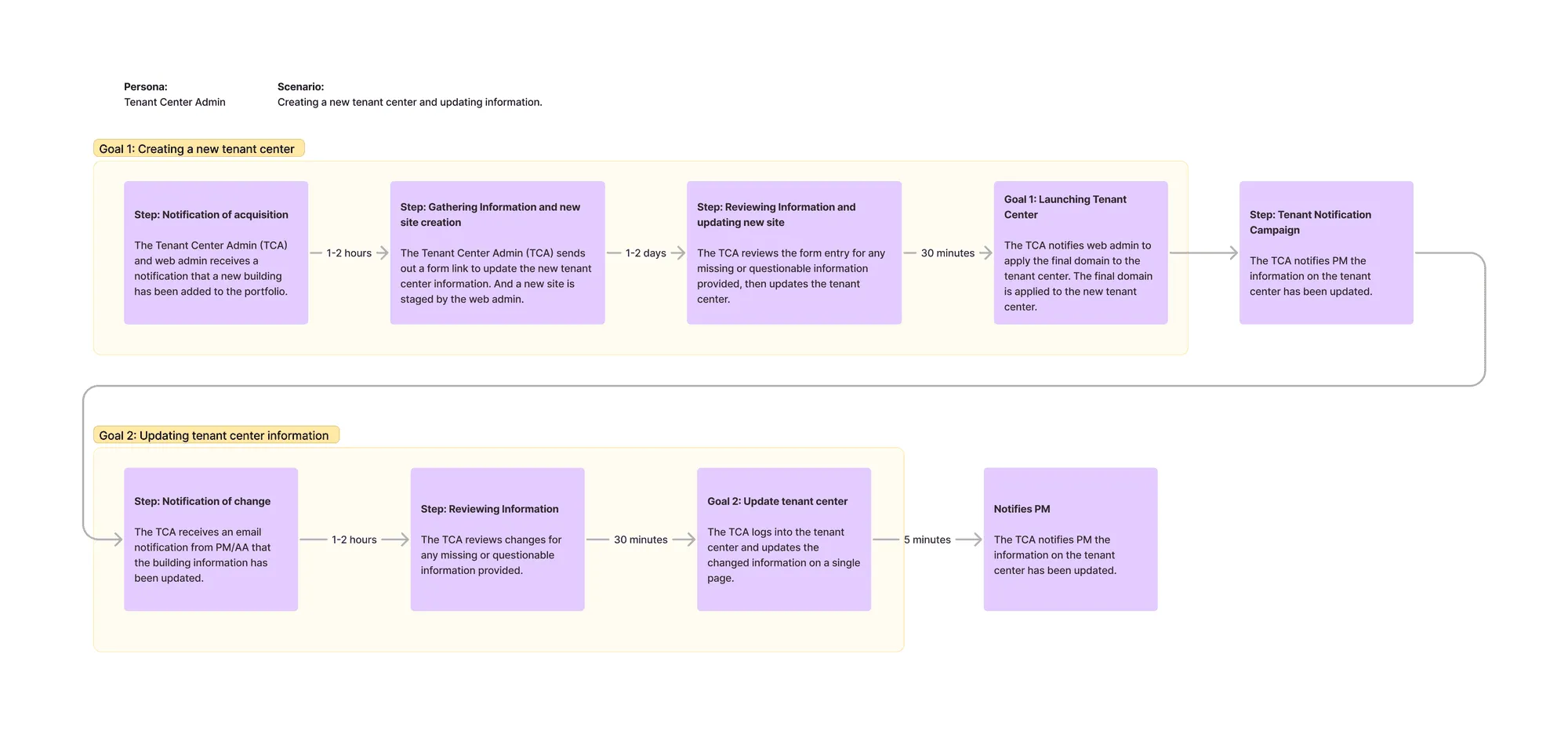
User feedback pointed at the same problems: the workflow was slow, editing site content was complicated and error-prone — especially during handovers — and with no standard way to collect content, every site ended up a little different.
The goal.
A dashboard that was easier to use and cheaper to run, where content could be updated quickly and accurately, with fewer places for errors to creep in.
What was done.
- Gathered and analysed user feedback to find the critical pain points.
- Used affinity mapping to find the common data across sites and restructure the dashboard around it.
- Prototyped the new dashboard and tested it in rounds.
- Built a custom multi-site web platform that the tenant relations coordinator could update directly, with a standardised intake form for property managers and content that could be set globally or per building.
More work.
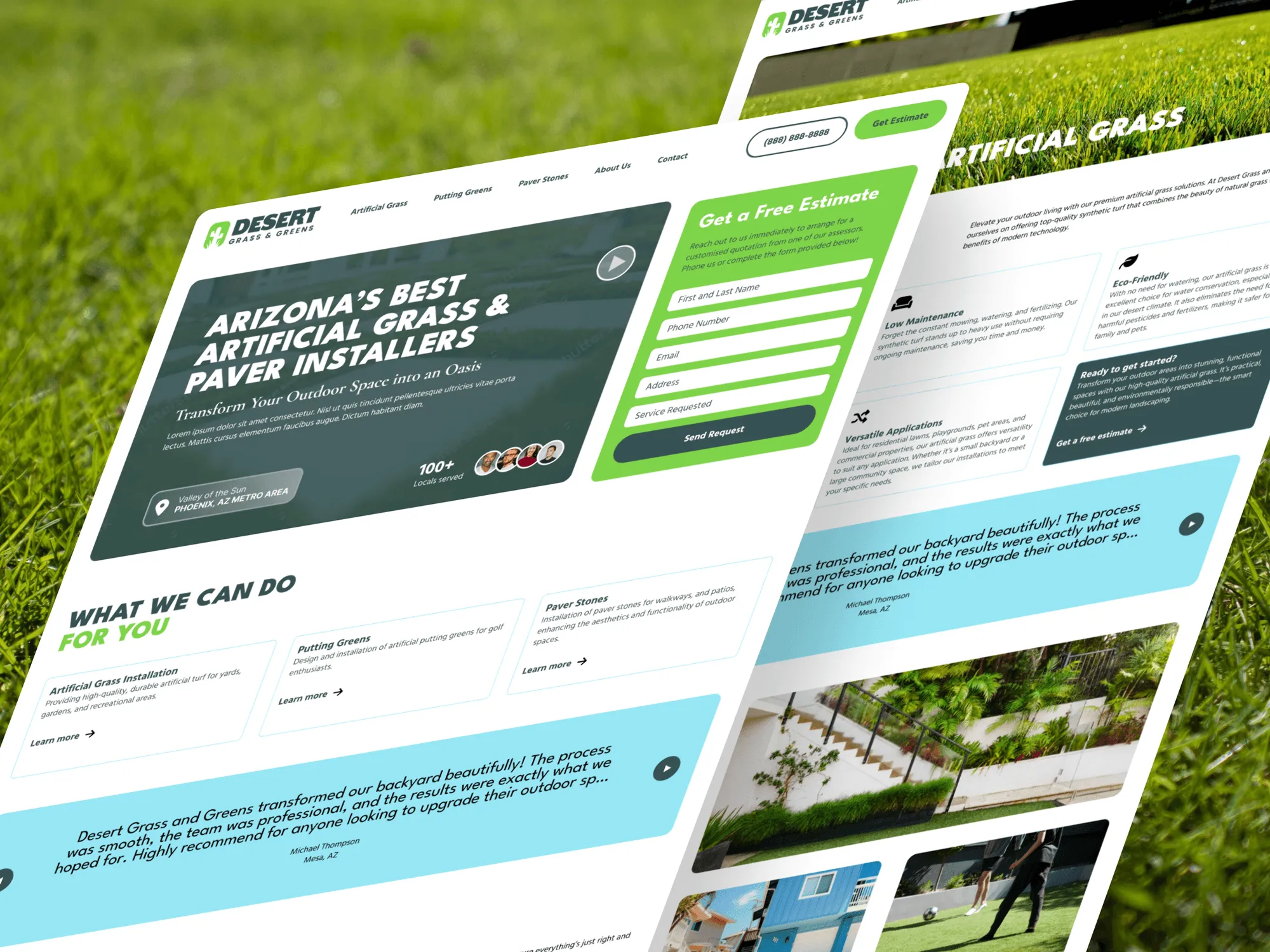
Desert Grass and Greens
Brand identity, website and SEO for an artificial turf installer.

Awakened Holistic Health
Rebrand, website redesign and sign-up flow for a holistic wellness practice.
Got a brief you're not sure about?
Bring it anyway. Half the value of the first conversation is finding out the brief was pointed at the wrong thing.